Travelling abroad with a baby or toddler can be exciting, but changes to time zones, unfamiliar environments and disrupted routines can affect your child’s sleep. The good news? With some preparation and realistic expectations, most children adapt within a few days.
This guide explains why jet lag happens in children and shares practical, evidence-based tips to help your child adjust before, during and after your journey.

Why does jet lag affect children?
Children (like adults) have an internal body clock, known as their circadian rhythm, which regulates:
- sleep and wake patterns
- hormones such as melatonin
- alertness and tiredness
- appetite and digestion
When we cross time zones, the external clock changes faster than the body clock can adapt.
This can lead to:
🌙 waking during the night
☀️ early mornings
😴 difficulty settling at bedtime
🥱 tiredness and irritability during the day
Before you travel: prepare your child’s body clock

If you are travelling across several time zones, start adjusting gradually if possible.
Travelling east (for example, UK → Europe/Asia)
As the day gets shorter, children often find this harder.
Try:
- moving bedtime 15–30 minutes earlier each night
- waking slightly earlier
- getting morning daylight exposure
Travelling west (for example, UK → USA)
The day becomes longer, so children may cope more easily.
Try:
- shifting bedtime slightly later
- allowing a later morning where appropriate
During the journey
The aim is not perfection; it is helping their brain adjust to the new time zone.
✔ Change watches/clocks to destination time
✔ Offer meals around destination times
✔ Encourage sleep if it matches night-time at your destination
✔ Keep children hydrated
✔ Bring familiar sleep cues: comforter, sleep bag, favourite book, white noise
The first few days after arrival
This is where many parents worry.
Your child may:
- wake at 3am ready to start the day
- struggle to stay awake until bedtime
- need extra reassurance
This is normal.
The most powerful reset button for the body clock is: ☀️ natural daylight
Try to:
- spend time outdoors during daylight hours
- keep naps close to their normal pattern
- avoid long, late afternoon naps
- follow your usual bedtime routine
What about naps?
A common mistake is allowing a very tired child to sleep for hours during the day.
A short recovery nap can help, but long daytime sleep can delay adjustment.
Aim to protect bedtime.
When you return home
Expect sleep to wobble again.
The best approach:
- return to your normal routine straight away
- keep familiar bedtime cues
- give your child a few days to readjust
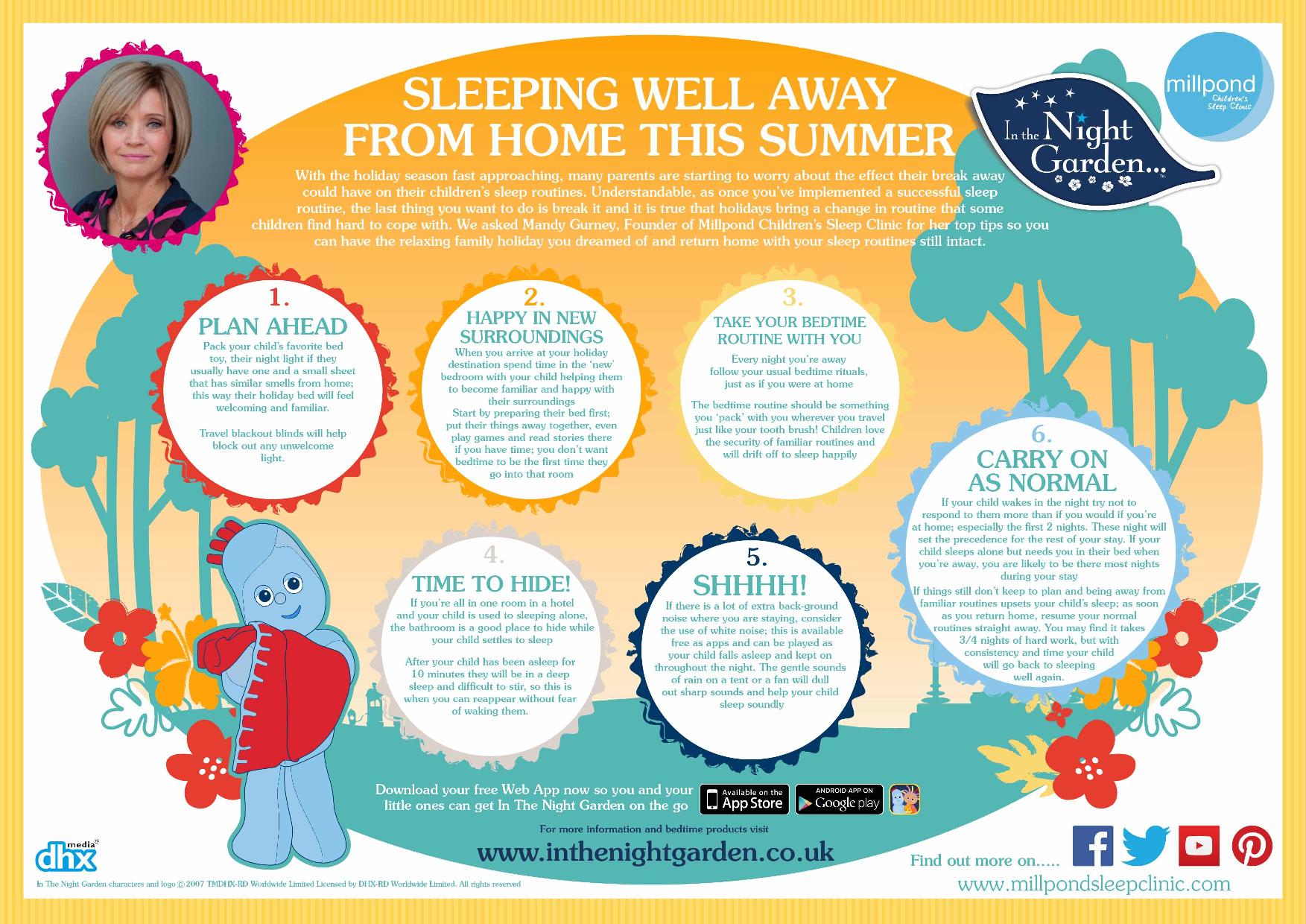
Helping your child sleep well on holiday
If you’re travelling with your child, jet lag isn’t the only challenge that can affect sleep.
Changes to routine, environment and bedtime can all make sleep more difficult while away from home. For more practical advice, read our guide on helping your child sleep well on holiday.
My final message
A holiday does not need to be perfectly structured for your child to sleep well.
The good news is that children are adaptable; aim to provide the familiar signals that help their body clock find its way again.
If your child’s sleep has become difficult after travel, or you’re struggling with ongoing night waking, early rising or bedtime challenges, our registered health professionals can provide personalised sleep support.