020 8444 0040 Contact Us
  • For Parents
    • 6 To 18 Months
    • Toddlers/Preschool
    • School Age
    • Teenagers
    • Case studies
    • Get Expert Help – Our Sleep Packages
    • Sleep Advice Videos
    • Safer Sleep Advice For Babies
    • FAQs about Sleep Consultants & Children’s Sleep
  • For Professionals
  • Sleep Shop
    • Sleep Packages
    • Sleep book
    • Teachers resource pack
  • About Us
  • Blogs
  • Contact

July 21, 2026

How to Get Your Baby to Sleep Through the Night: What Every Parent Needs to Know

How to get your baby to sleep through the night

If you’ve searched “how to get my baby to sleep through the night,” you’re not alone. It’s one of the most common questions parents ask, especially during those exhausting weeks and months of broken sleep.

You may be wondering:

  • Why does my baby keep waking?
  • Should they be sleeping for longer by now?
  • Am I doing something wrong?

The reassuring news is that night waking is a normal part of infant development. Babies are not born with mature sleep patterns, and learning to sleep for longer stretches happens gradually as they grow.

While there is no magic solution that works for every baby, understanding how sleep develops and creating healthy sleep habits can make a real difference.

how to help my baby sleep through the night

What does “sleeping through the night” actually mean?

Many parents imagine that sleeping through the night means a baby sleeping peacefully for 10 to 12 hours without waking.

In reality, research studies have used different definitions. Some define “sleeping through the night” as a continuous five-hour stretch of sleep, while others use longer periods. This differs considerably from what many parents expect.

Babies naturally wake briefly between sleep cycles, just as adults do. The difference is that young babies often need help settling back to sleep.

Evidence: Henderson JM, France KG, Owens JL & Blampied NM (2010). Sleeping Through the Night: The Consolidation of Self-Regulated Sleep Across the First Year of Life. Pediatrics.

Why do babies wake during the night?

Night waking isn’t usually a sign that something is wrong. It reflects how babies are designed to sleep.

Young babies wake because they:

  • need feeding
  • have short sleep cycles
  • are still developing their internal body clock
  • spend more time in lighter stages of sleep
  • seek comfort and reassurance from their parents

As babies mature, their sleep gradually becomes more organised, and many begin to sleep for longer stretches.

Every baby is different

One of the biggest myths about baby sleep is that all babies should sleep through the night by a certain age.

In reality, sleep is influenced by many factors, including:

  • age and stage of development
  • feeding needs
  • temperament
  • genetics
  • health and wellbeing
  • family routines

Some babies naturally sleep for longer stretches earlier than others. Both can be completely normal.

baby wide awake in the night

Supporting your baby’s sleep

Although you can’t make a baby sleep before they are developmentally ready, you can create the right conditions for healthy sleep.

Simple ways to support your baby’s sleep include:

Create a calming bedtime routine

A predictable routine helps signal that bedtime is approaching.

Encourage day and night differences

Natural daylight, play and interaction during the day, alongside a calm, dimly lit environment at night, help babies develop their body clock.

Make sure your baby isn’t overtired

Appropriate daytime naps often lead to better night-time sleep.

Respond consistently

Babies thrive on loving, predictable responses that help them feel secure while gradually developing their own settling skills.

napping problems

Remember: young babies are designed to wake

Many parents worry that frequent waking means they have created a “bad habit.”

In fact, young babies have immature sleep and arousal systems. Waking during the night is a normal part of early development and helps ensure their needs for feeding, comfort and safety are met.

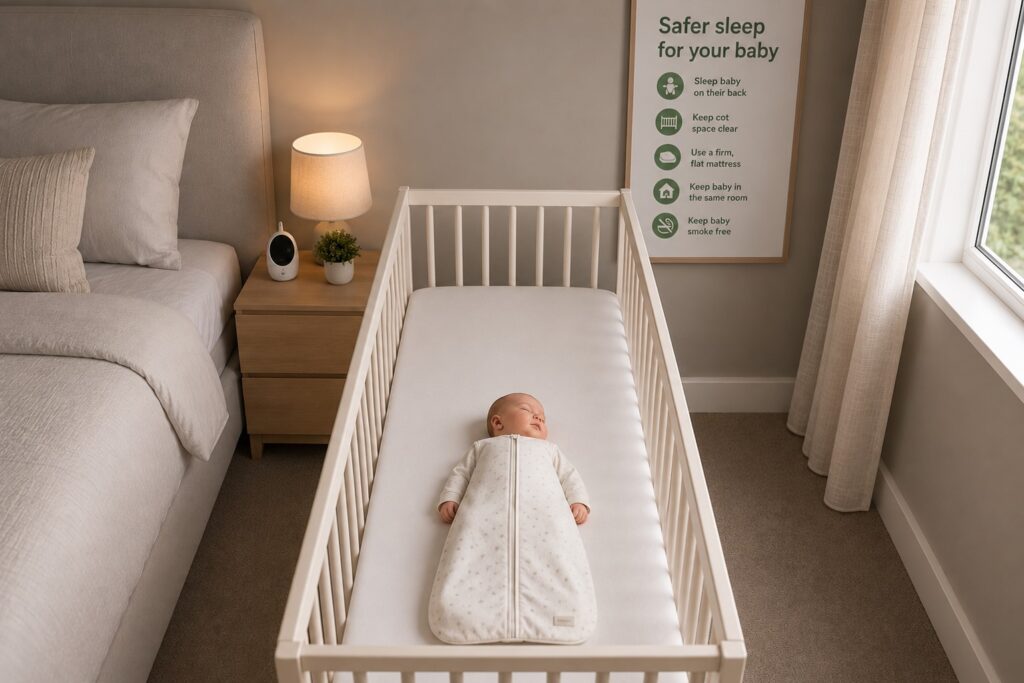
Following safer sleep guidance—including placing your baby on their back to sleep, using a firm, flat sleep surface and sharing a room (but not a bed) for the first six months—remains one of the most important ways to reduce the risk of Sudden Infant Death Syndrome (SIDS).

When should you seek help?

While night waking is normal, there are times when extra support can help. If your baby’s sleep is leaving your family exhausted, affecting your wellbeing or becoming increasingly difficult to manage, it may be helpful to seek professional advice.

At Millpond Children’s Sleep Clinic, our team of qualified health professionals takes a holistic approach to children’s sleep. We look beyond the waking itself, considering your baby’s development, health, temperament and family circumstances to create gentle, personalised sleep plans that work for your family.

Looking for more support?

You may also find these articles helpful:

  • Why Does My Baby Wake So Much at Night? (coming soon)
  • When Will My Baby Sleep Through the Night? (coming soon)
  • How to Help Your Baby Sleep Longer at Night (coming soon)
  • Understanding the 4-Month Sleep Regression (coming soon)

Further reading:

• American Academy of Pediatrics – Sleeping Through the Night: The Consolidation of Self-Regulated Sleep Across the First Year of Life

• NHS – Your Baby’s Sleep Patterns

• The Lullaby Trust – Safer Sleep for Babies

Filed Under: Babies sleep, Baby not sleeping, Baby sleep, Understanding young babies sleep Tagged With: baby sleep, Baby Sleep Advice, baby sleep patterns, baby sleep tips, baby waking at night, bedtime routine, gentle sleep support, Infant development, Infant sleep, newborn sleep, safe sleep, SIDS, Sleep Consultant, sleeping through the night

May 7, 2026

Baby Sleep Advice UK: Safe Sleep Guidance

Baby Sleep Advice UK: Safe Sleep Guidance

Baby sleep advice UK safe sleep guidelines for infants and children

If you are searching for baby sleep advice in the UK or wondering whether a sleep consultant is right for your baby, you are not alone.

Exhaustion, broken nights, and conflicting advice can leave parents feeling overwhelmed and unsure who to trust. One person tells you one thing, another says something completely different — and in the middle of it all is your baby.

In light of recent BBC reporting on baby sleep advice and unregulated sleep consultants in the UK, many parents are now asking an important question:

Who is actually qualified to give safe sleep advice for babies and children?


Why baby sleep advice in the UK feels so confusing

Baby sleep is one of the most searched parenting topics, yet also one of the most confusing.

That’s because baby sleep is often treated as a standalone issue, when in reality it is closely linked to:

  • Feeding and nutrition
  • Growth and physical development
  • Emotional security and attachment
  • Health conditions or discomfort
  • Parental stress, recovery, and exhaustion

There is no single method or quick fix that works for every baby.

What helps one baby may not be appropriate or safe for another.


Safe sleep advice for babies: what all parents should know

Baby Sleep Advice UK Safe Sleep GuidanceWhen you are sleep deprived, it can feel tempting to try anything that promises more sleep. But when it comes to infant sleep, safety must always come first.



UK safe sleep guidelines are designed to reduce the risk of sudden infant death syndrome (SIDS) and other sleep-related harm.

  • Key safe sleep recommendations include:
  • Always place your baby on their back to sleep at the foot of the crib/cot
  • Use a firm, flat mattress
  • Keep the sleep space clear (no pillows, toys, or loose bedding)
  • Keep your baby in the same room as you for at least 6 months
  • Avoid overheating
  • Ensure a smoke-free environment

Trusted guidance:
https://www.lullabytrust.org.uk/safer-sleep-advice/
https://www.nhs.uk/conditions/sudden-infant-death-syndrome-sids/

These safe sleep guidelines should underpin all baby sleep advice in the UK.


Why you need to be careful who you trust for sleep support

A key issue in the UK is that anyone can describe themselves as a “sleep consultant” or “sleep expert” without clinical training or regulation.

This means parents may not always know:

  • Whether advice is based on medical evidence
  • Whether safe sleep guidelines are being followed
  • Whether infant feeding and development are understood
  • Whether the advice is regulated or accountable

When you are searching for help with baby sleep, this can be incredibly difficult to navigate.

But it matters, because baby sleep advice must never compromise infant safety.


Why clinical training matters in baby sleep support

Infant and child sleep is not just behavioural, it is part of a much wider picture of health and development.

Within the NHS, health professionals are trained to understand:

  • Infant development and behaviour
  • Feeding and nutrition
  • Attachment and emotional well-being
  • Maternal and parental mental health
  • Safeguarding and family wellbeing

Sleep sits across all of these areas.

This is why clinical expertise is essential when offering baby sleep advice in the UK. It ensures sleep is understood in context, not in isolation.


What parents should look for in a sleep consultant UK

sleep coaching

If you are considering working with a sleep consultant in the UK, it is important to ask:

  • Are they clinically trained (nurse, midwife, health visitor, GP, paediatric professional)?
  • Do they understand infant health, feeding, and development alongside sleep?
  • Is their advice aligned with UK safe sleep guidelines?
  • Are they accountable to a regulated professional body?

These questions can help parents choose safer, more reliable support.


A message to parents

Baby Sleep Advice UK: What Parents Need to Know

As a Registered Nurse, Midwife, and Health Visitor, and Founder of Millpond Children’s Sleep Clinic, I have worked with families for nearly 20 years.

One thing remains constant:

  • Parents are not failing. They are often exhausted and overwhelmed, trying their best while navigating conflicting baby sleep advice.
  • There is no perfect sleeper and no single method that works for every baby.
  • But there is safe, evidence-based support available, and you should never feel pressured to follow advice that does not feel right for your baby.
  • If in doubt, always seek guidance from a qualified health professional.

Suggested Millpond Sleep Clinic Reading for Parents

  • Baby Wake Windows by Age: A Gentle Guide for Parents
    https://millpondsleepclinic.com/blog/
  • Understanding Baby Sleep Cues for Better Sleep
    https://millpondsleepclinic.com/blog/
  • Understanding Babies Sleep From 6 to 12 Months
    https://millpondsleepclinic.com/blog/
  • The Surprising Truth About Newborn Sleep Patterns Revealed
    https://millpondsleepclinic.com/blog/
  • Creating a Bedtime Routine for Your Baby
    https://millpondsleepclinic.com/blog/
  • How Developmental Stages Affect Baby and Child Sleep
    https://millpondsleepclinic.com/blog/

Trusted resources for baby sleep advice UK

BBC News investigation:
https://www.bbc.co.uk/news/articles/ce84e1vn1l2o

The Lullaby Trust safe sleep advice:
https://www.lullabytrust.org.uk/safer-sleep-advice/

NHS safe sleep guidance:
https://www.nhs.uk/conditions/sudden-infant-death-syndrome-sids/

Filed Under: All, Babies sleep, Uncategorized Tagged With: baby sleep advice UK, baby sleep consultant UK, baby sleep problems UK, evidence-based baby sleep, health visitor sleep advice, infant and child sleep, infant sleep advice UK, Lullaby Trust safe sleep, newborn sleep advice UK, newborn sleep UK, NHS safe sleep advice, regulated sleep advice UK, safe sleep advice for babies UK, safe sleep guidelines UK, SIDS safe sleep, sleep consultant UK, sleep training UK

May 3, 2026

Understanding your newborn baby’s sleep (0–4 months)

Understanding your newborn baby’s sleep (0–4 months)

understandin newborn sleep

Bringing home a newborn is an exciting and emotional time, but many parents are surprised by just how unpredictable their baby’s sleep can feel. Short naps, frequent waking and broken nights are often very different from the sleep patterns parents imagined.

Understanding what typical newborn sleep looks like can help you feel more confident and reassured during these early months.

Newborn sleep is very different from older babies’, children’s, and adults’ sleep and is often far more unpredictable than parents expect.

In the first months of life, babies do not yet have a fully developed body clock. Instead, their sleep is driven mainly by feeding needs and short biological sleep cycles rather than a clear day–night rhythm.

This is normal development and not something that needs to be fixed.

As your baby grows, sleep gradually becomes more organised, with longer night-time stretches and more predictable patterns emerging from 3–4 months old.

Why newborn sleep feels so unpredictable

Our sleep is guided by an internal 24-hour body clock, known as the circadian rhythm. This helps regulate when we sleep, wake, and eat, using light and darkness as cues.

Before birth, your baby lives in a dark environment where there is no day or night cue. As a result, this rhythm is not yet fully developed at birth.

undersatndin newborn babies sleep

Instead, your newborn is guided by:

  • the need to feed
  • short sleep cycles
  • early brain development

This is why sleep often feels irregular and fragmented in the early weeks.

During pregnancy, your movement and hormones (including melatonin passed through the placenta) help regulate your baby’s sleep.

After birth, your baby must begin producing their own hormones and developing their own sleep rhythm.

What typical newborn sleep looks like

understanding infant sleep

Newborn babies usually sleep between 14 and 17 hours in 24 hours, although there is considerable individual variation. Some babies sleep more, while others sleep less.

This sleep is split into many short periods rather than one long stretch. Sleep is usually divided fairly evenly between day and night in the early weeks.

Because your baby’s tummy is very small, they need to feed frequently, which naturally means they sleep for short periods at any one time.

Most young babies can only be awake for short periods, around 45–60 minutes, before they need to sleep again.

understanding infant sleep

Baby sleep cycles

In the early months:

  • Daytime sleep cycles are around 30 minutes
  • Night-time sleep cycles are around 60 minutes

Babies’ shorter sleep cycles and lighter sleep patterns are thought to support frequent waking and responsiveness during a period when they are dependent on adults for feeding, comfort and regulation.

Because newborn babies are still developing their ability to regulate important functions such as breathing and temperature, following safer sleep guidance is essential. Placing babies on their back to sleep, using a clear, flat sleep surface and sharing a room (but not a bed) for the first six months are key recommendations to reduce the risk of SIDS.

What kind of sleep does your young baby have?

Young babies do not cycle through sleep in the same way adults do.

Instead, they experience two main types of sleep:

  • Active sleep (REM sleep)
  • Quiet sleep (non-REM sleep)

Newborns spend a large proportion of time in active (REM) sleep, which is thought to be important for brain development and the formation of neural pathways.

understanding newborn babies sleep

During active sleep, you may notice your baby:

  • moving or twitching
  • making small facial movements
  • rapid eye movements under closed eyelids
  • changes in breathing

At times, this can look like your baby is awake, but they are often still asleep and may naturally settle back into a deeper sleep stage.

How sleep changes from 2 to 4 months

By around 8–10 weeks, many babies begin to show clearer signs of day and night separation. While sleep still varies, parents often notice longer nighttime stretches emerging.

By 3 months, sleep patterns typically become more organised:

  • More sleep is taken at night than during the day
  • Night sleep begins to consolidate into longer blocks
  • Daytime naps become more structured

At this stage, many babies begin producing their own melatonin, which supports more predictable sleep–wake rhythms.

By around 3–4 months, sleep cycles also begin to mature, with:

  • night cycles extending to around 90 minutes
  • daytime cycles extending to around 45 minutes
  • longer periods of sleep before waking

This is a natural developmental shift, not a behavioural change.


A final note for parents

In the early months, unpredictable sleep is expected and developmentally normal.

If your baby is waking frequently, needing lots of comfort, or sleeping in short stretches, this is usually part of healthy development.

Sleep patterns will naturally evolve as your baby’s brain and body mature.

Filed Under: Babies sleep, Baby sleep, How Can I Get My Baby To Sleep Better, Sleep Cues, Understanding young babies sleep Tagged With: baby sleep 0-4 months, baby sleep consultant UK, baby sleep cycles, Baby sleep development, infant sleep advice, Infant sleep patterns, newborn routine, newborn sleep, newborn sleep guide, safe baby sleep UK, why doesn't my baby sleep, will my baby sleep

April 21, 2026

Baby Sleep Help: Tracking & Sleepmaxxing Can Make Sleep Harder

Baby Sleep Help: What is Sleepmaxxing and Why Does It Matter?

From tracking sleep scores on devices like Oura Ring and Fitbit, to closely monitoring rest and recovery, sleep is increasingly being treated like something to perfect.

This trend is often called sleepmaxxing, the idea that better sleep comes from more data, more tracking, and more control.

But for many people, it has had the opposite effect: more information, but less confidence in sleep itself.

In sleep research, this is linked with a phenomenon known as Orthosomnia, where pressure to achieve “ideal sleep” based on tracking actually increases anxiety and makes sleep feel worse.  This is something we are increasingly seeing in families looking for baby sleep help

When sleep tracking becomes part of parenting

It is increasingly common for parents to track naps, night wakings, and wake windows in detail.  While this can feel helpful at first, it can quickly become overwhelming.

Parents often find themselves:

  • Monitoring every nap length
  • Adjusting bedtime daily
  • Analysing night wakings
  • Comparing sleep to apps or schedules
  • Worrying when sleep does not follow a “pattern”

What starts as reassurance can slowly turn into pressure.

Not because parents are doing anything wrong, but because baby and child sleep was never meant to be this tightly controlled.

baby and child sleep help

Why baby and child sleep isn’t something to optimise

Sleep in babies and children is still developing and naturally variable.

It is influenced by many factors, including:

  • Age and stage of development
  • Temperament
  • Natural sleep rhythm (chronotype)
  • Emotional development
  • Environment and stimulation
  • Physical factors such as teething or illness

Because of this, sleep will naturally change from day to day and across different stages of childhood; this variation is normal.

Parent comforting baby during night waking

Why weekly trends matter more than daily tracking

One of the most helpful shifts for parents is moving away from analysing each day.

Instead of focusing on whether a nap was short or a night was disrupted, it can be more useful to look at sleep across a full week.

Some days and nights will go more smoothly than others, and that is completely normal.

Babies and children are constantly developing, and this alone can temporarily affect sleep. On top of that, factors like teething, illness, developmental changes, or even a more stimulating day can all play a role.

Sleep is not meant to look identical every night; it naturally varies as children grow and develop.

help with baby sleep

Why instincts matter more than data

While tracking tools can provide information, they cannot fully capture the individuality of a child.

This is where parental instinct and observation become far more valuable.

Every baby and child has their own:

  • Temperament
  • Natural rhythm (chronotype)
  • Unique sleep needs

No app or algorithm can fully reflect these differences.

Getting to know your child, how they show tiredness, how they settle, and what helps them feel secure, often becomes more useful than any set of numbers.

A more helpful approach to sleep

If sleep feels overwhelming, it can help to step back from constant adjustment and focus on a simpler approach:

  • Look for patterns over several days, not individual nights
  • Keep routines consistent rather than constantly changing them
  • Respond to your child, not just the clock
  • Expect variation; it is part of normal development
  • Reduce reliance on tracking for reassurance

waking in the night

When to seek support

If sleep is consistently affecting family wellbeing, it may be helpful to seek personalised support.

Sleep challenges are very common, and early guidance can often make a significant difference for both parents and children.

Filed Under: Babies sleep, Baby not sleeping, Day Time Naps, How Can I Get My Baby To Sleep Better, How much sleep does my child need?, How to help my child sleep well, Wake Windows Tagged With: Baby Sleep Help, Baby Sleep Problems, Baby Sleep Routine, Child Development, child sleep, Gentle Parenting Sleep, Infant development, Infant Sleep Support, New Parents, Normal Baby Sleep, Parenting Sleep Advice, Parenting Tips, Sleep Anxiety in Parents, Sleep Tracking Babies, Sleepmaxxing

March 4, 2025

White Noise & Baby Sleep: Is It Safe?

White Noise & Baby Sleep: What the Science Says

white noise machine

If you’re a parent, chances are you’ve heard that white noise can help babies sleep better. Maybe you were gifted a white noise machine at your baby shower, or perhaps you’ve seen countless sleep experts (and exhausted parents) recommending it on social media.

White noise is often praised as a “no-fail” baby sleep tool, and many parents swear by it, finding they create a soothing sleep environment that blocks out household noises and helps their little one settle more easily.

But is white noise really necessary? And more importantly, is it always safe?

A new study published in Sleep Medicine has raised concerns about how loud some white noise machines are, warning that many exceed safe levels even for adults. The American Academy of Pediatrics (AAP) also provides guidance on how to use white noise safely to ensure it supports—rather than disrupts—healthy sleep.

Let’s break down the latest research and expert recommendations so you can make the best decision for your baby’s sleep.


What Is White Noise?

is white noise safe for babies

White noise is a consistent, unchanging sound that combines all audible frequencies together. Parents often use it to help babies sleep because it:

  • Masks sudden noises (e.g., traffic, siblings, pets) that could wake a baby
  • Mimics the sounds of the womb, where babies hear continuous background noise
  • May help babies fall asleep faster and stay asleep longer

It’s important to note that while white noise can be helpful, not all babies need it. Some infants naturally adjust to their environment and sleep well without it.


Does White Noise Actually Help Babies Sleep?

Yes—for some babies.

A study published in the Archives of Disease in Childhood found that 80% of babies fell asleep within 5 minutes when exposed to white noise, compared to just 25% without it.

Other research suggests that white noise can improve sleep efficiency, particularly in environments with frequent background disturbances.

However, it’s important to use white noise correctly, as recent studies have raised concerns about volume levels and long-term effects.


Are White Noise Machines Too Loud for Babies?

is white noise safe for babies

A 2024 study published in Sleep Medicine analysed 14 popular infant white noise machines and found that:

  • ALL exceeded the recommended 50 dB when placed near a crib
  • Some machines reached 85+ dB—equivalent to city traffic or a lawnmower
  • Most machines do not specify volume output, making it difficult for parents to gauge safe levels

Dr. Isaac Erbele, an ear and skull surgery specialist at Brooke Army Medical Center, explained:

“These devices exceeded what is appropriate for hearing health for any individual, just walking around and living their life.” (ABC News)

This means many baby sound machines are louder than recommended for even adult workplaces, making safe use crucial.


Is White Noise Safe for Babies?

White noise can be safe and beneficial, but only when used correctly.

The American Academy of Pediatrics (AAP) provides the following key safety recommendations:

  • Keep the machine at least 7 feet (2 meters) away from the crib
  • Keep the volume under 50 dB (equivalent to a quiet shower)
  • Limit use—white noise should not be played all night
  • Check noise levels using a free decibel meter app

A simple way to test? Stand next to your baby’s crib while the white noise is on. If you have to raise your voice to speak at a normal level, it’s too loud.


Can White Noise Affect Hearing or Development?

Concerns have been raised about whether prolonged exposure to white noise could impact hearing, speech development, or auditory processing. Here’s what research tells us:

Hearing loss risk: Long-term exposure to loud white noise (above safe limits) could contribute to hearing damage over time. (Pediatrics)

Speech delays: There is no evidence that white noise at safe levels causes speech delays, but babies need regular exposure to speech and language during awake time.

Auditory processing concerns: A commonly cited study on rats exposed to continuous 24-hour white noise suggested potential issues with auditory development, but this does not reflect normal use in babies. When used just for sleep, there’s no evidence of negative effects.

Bottom line? White noise should be used only during sleep and at a safe volume—not 24/7.


How to Use White Noise Safely for Baby Sleep

If you choose to use white noise, follow these safety guidelines:

  • Only use white noise if environmental sounds are disrupting sleep
  • Keep the volume under 50 dB (check with a decibel meter app)
  • Place the machine at least 7 feet (2 meters) from the crib
  • Use it for settling, but avoid playing it all night
  • Try alternatives: Soft lullabies, natural sounds, or a fan

🔍 Not sure if your white noise is too loud? If it sounds louder than a running shower, turn it down.


When Should You Stop Using White Noise?

There’s no strict need to stop using white noise as long as it remains at a safe volume. However, some parents choose to phase it out over time.

You can:

  • Gradually reduce the volume every few nights
  • Shorten the duration, using it just for settling instead of all night

Some adults even continue using white noise for sleep into later life—so it’s really about what works for your child!


Final Thoughts: Does Your Baby Need White Noise?

white noise

White noise can be helpful, but it isn’t essential for all babies. If your baby sleeps well in a quiet environment, there’s no need to introduce it.

But if external noise regularly disrupts your baby’s sleep, a properly used white noise machine can be a useful tool. The key is to use it safely—keeping volume low, distance far, and limiting duration.


Need Expert Sleep Support?

If you’re struggling with your child’s sleep and need expert guidance, Millpond Sleep Clinic is here to help.

Our science-backed sleep solutions have helped thousands of families—let us help yours, too!

📞 Contact us today to book a consultation and start your journey to better sleep.

Written March 2025

Filed Under: Babies sleep, Baby not sleeping, Bedtime Routine, How Can I Get My Baby To Sleep Better, White Noise Tagged With: Best baby sound machines, How loud should white noise be for babies?, Is white noise safe for babies?, White noise safety guidelines, White noise vs. pink noise for baby sleep, will white noise help my newborn sleep

November 17, 2024

Understanding Baby Sleep Cues for Better Sleep

As parents, few things are as precious as the sight of our little ones drifting off into a peaceful slumber. Yet, the journey to achieving those moments can often be filled with uncertainty and frustration, especially when it comes to understanding your baby’s sleep patterns. However, within their subtle cues lies the insight that can transform the way we approach both naps and bedtimes.

The Language of Sleep:

Babies have their own unique language when it comes to letting you know it’s time for sleep. These cues can range from subtle to unmistakable, and learning to interpret them will help to develop healthy sleep habits.
Common baby sleep cues:
  • Eye Rubbing: As fatigue sets in, babies often rub their eyes as a way to soothe themselves and prepare for sleep.
  • Yawning: A classic sign of drowsiness, frequent yawning signals that bedtime is approaching.
  • Irritability and fussiness: pulling at ears, and clenching fists can indicate that your baby is tired and in need of rest.
  • Becoming quiet and still: A decrease in movement or engagement with surroundings suggests that your baby is winding down and getting ready for sleep.
  • Ignoring interaction and losing interest in toys and people can suggest your baby is feeling tired.
  • A Glazed Expression: Staring into space or glazed-over look in your baby’s eyes can indicate fatigue and the onset of sleepiness.
baby sleep cues

Why do sleep cues matter?

  • Recognising and responding to your baby’s sleep cues is not just about ensuring a smoother bedtime routine; it’s also about meeting your baby’s need for rest and comfort.
  • Tuning into your baby’s cues will help you establish a sleeping pattern for your baby that aligns with their unique natural rhythms, promoting better sleep quality and duration.
  • Responding to your baby’s sleep cues also helps to prevent them from becoming overtired and fractious.
  • A well-rested baby can engage with the world around them, supporting healthy growth and development.
  • If you can respond to your baby’s early sleep cue signals, they will be more relaxed and find it easier to fall asleep.
baby sleep cues

To understand your baby’s sleep cues, here are some tips:

  • Observe your baby’s behaviour: Try looking for subtle changes in your baby’s behaviour and mood throughout the day. Over time you may start to see patterns and consistent cues that signal tiredness or drowsiness.
  • Learn your baby’s unique language: Every baby has their own specific cues for sleep, so try to find some time to understand and interpret your baby’s signals such as eye rubbing, yawning, becoming quiet and still, or a glazed expression.
  • Take note of timing: Try keeping track of the times when your baby typically shows signs of tiredness. This can help you anticipate their sleep needs and establish a routine around their natural rhythms.
  • Understanding your baby’s sleep cues can take time: Be kind to yourself as you observe and learn to recognise your baby’s signals for sleep. It’s a journey, and with time you and your baby will find a rhythm that works.
  Understanding and responding to your baby’s sleep cues can transform sleep times into a serene, bonding experience. By recognising their signals you can create a routine that matches their natural rhythms. This journey requires patience and observation, but it will help you establish regular sleep patterns. Be kind to yourself, and with time, you and your baby will find a rhythm that ensures more peaceful nights and well-rested days. Written by Mandy Gurney RGN.RM.DipHV Founder of Millpond Children’s Sleep ClinicHere are some helpful suggestions for understanding your baby’s sleep cues:    

Filed Under: All, Babies sleep, Baby awake for long periods at night, Baby not sleeping, Day Time Naps, How Can I Get My Baby To Sleep Better, Naps part 1, Naps part 2, Sleep Cues, Understanding young babies sleep Tagged With: Baby bedtime signals, baby sleep cues, Baby sleep development, baby sleep patterns, baby sleep tips, Bedtime routines for babies, Deciphering baby sleep cues, help baby sleep, Infant sleep behaviour, Infant sleep patterns, Newborn sleep cues, over tired baby, over tired toddler, Parenting advice for better sleep, Parenting and sleep cues, Recognizing baby sleep signals, Sleep cues for newborns, toddler sleep cues, Understanding baby sleep, what are sleep cues

August 19, 2024

Why Sleep Coaching Isn’t One-Size-Fits-All

Tailoring Sleep Coaching Approaches to Fit Your Child’s Needs

sleep coaching

One thing has become abundantly clear over my many years of working with families on sleep: there’s no one-size-fits-all solution when it comes to sleep coaching! Each child is unique, and their sleep challenges—and the solutions—need to be just as individualised.

When I first started working in this field there was very little research on sleep, only a couple of books and certainly no social media platforms. Now things are very different, which is a good thing but parents often feel overwhelmed by the sheer volume of advice out there. From strict routines to the latest sleep gadgets, it’s easy to get lost in a sea of conflicting information.

But here’s the key: what works for one child may not work for another, and that’s okay!

Here’s how we approach sleep coaching to ensure it’s as effective as possible:

  • Understanding Individual Sleep Patterns: Every child has their own natural sleep rhythms. By observing and understanding these patterns, we can create a customised sleep plan that aligns with their unique needs.
  • Considering the Family Dynamic: A successful sleep strategy doesn’t just work for the child—it works for the whole family. We consider parents’ routines, sibling dynamics, and cultural factors to ensure the plan is practical and sustainable.
  • Gentle, Gradual Methods: Abrupt changes can be stressful for both parents and children. We favour gentle, evidence-based approaches that respect the child’s pace, ensuring a smoother transition to better sleep habits.
  • Ongoing Support and Adjustments: As babies and children adapt to the new routines and their sleep improves, their sleep plans will also be adapted to reflect this. We’re here to support families every step of the way, making necessary adjustments to keep sleep on track through different stages of development.

Sleep coaching isn’t about following a rigid formula but finding what works best for your baby, child and family. You can create a peaceful bedtime routine that promotes healthy sleep and happy, well-rested children with the right approach.

If you’re struggling to find the right sleep solution for your baby or child, we’re here to help.

Let’s work together to create a personalised plan that meets your family’s needs


Filed Under: Babies sleep, How to help my child sleep well Tagged With: BetterSleepForKids, ChildSleep, ChildSleepSolutions, CustomisedSleepPlans, FamilyWellness, GentleSleepApproach, ParentingAdvice, ParentingSupport, RestfulNights, Sleep Coaching, SleepConsultant, SleepSupport HealthySleepHabits, SleepTipsForParents, Tailored Sleep Solutions

August 1, 2024

Discover Why Your Baby’s Wide Awake At Night

Why Your Baby Stays Awake for Long Periods at Night: Causes and Solutions

As a parent, you may be wondering why your baby is awake for long periods during the night. While every baby is unique, several common factors might contribute to their extended wakefulness. Understanding these factors can help you better manage your baby’s sleep patterns and ensure that both you and your little one get the rest you need.

baby awake in the night

Developmental Milestones:

As babies grow, they often reach developmental milestones that can temporarily disrupt their sleep. Learning new skills like sitting, crawling, or standing can cause them to wake up and want to practice these new abilities.

Sleep Onset Associations:

When a baby is used to specific conditions or methods to fall asleep, such as being rocked or held, they may need the same conditions to fall back asleep when they wake at the end of a sleep cycle. Without these familiar sleep associations, they might wake up fully and need assistance to return to sleep. As morning approaches, the reduced levels of sleep hormones like melatonin and adenosine make it harder for babies to fall back asleep, potentially keeping them awake for extended periods, sometimes even hours.

Hunger or Thirst:

Babies, especially younger ones, might wake up because they are hungry or thirsty. Nighttime feedings are common in infants under a year, but hunger can still occasionally wake older babies and toddlers too.

Overtired and Awake:

An overtired baby often struggles to settle down for sleep. They might become dysregulated, fussy, irritable, and harder to soothe. This restlessness can prolong the time it takes for them to fall asleep initially and may lead to more frequent awakenings throughout the night.

Discomfort or Illness:

Discomfort from teething, nappy rash, illness, or other physical discomforts can keep a baby awake for extended periods. Conditions like ear infections, colds, or reflux can disrupt their sleep.

Daytime Sleep Patterns:

Having too much daytime sleep can affect nighttime sleep. All babies have different sleep needs; the key is to get the right balance for your baby between daytime naps and nighttime sleep.  If your baby is awake for long periods in the night and is happily awake, wanting to play, they may be having too much sleep in the day.

Nighttime -how much sleep should my baby have at night:

Everyone has different sleep needs, and some of us are genetically determined to need less sleep than others. Understanding your baby’s unique sleep needs can help address and reduce those long periods of wakefulness during the night.

Hoping that your baby or young child will sleep for 12 hours overnight is usually unrealistic; the average overnight sleep needs for this age group are 10 to 11 hours, with or without a feed.

My baby is content happily awake in the night and doesn’t seem tired:

If your baby is awake and content and happily “chatting” or playing, they may be spending too long in bed and as a consequence have developed a “split night,”. This is called low sleep efficiency.

Sleep efficiency measures how much time is spent asleep compared to the total time in bed.

  • High sleep efficiency means most of the time in bed is spent sleeping, which indicates good sleep quality.
  • Low sleep efficiency suggests frequent awakenings or difficulty staying asleep.

To calculate sleep efficiency, compare the total time your baby is in bed to the time they are asleep. For example, if your baby is in bed for 12 hours but only sleeps for 10, they have low sleep efficiency.

To improve sleep efficiency and reduce nighttime wakefulness, adjust your baby’s schedule so that the time they spend in bed matches their actual sleep needs, such as 10 hours.

baby awake in the night

To help manage and reduce extended wakefulness at night:

  • Establish a consistent bedtime routine: A predictable sequence of calming activities can signal to your baby that it’s time to sleep.
  • Have a regular wake time in the morning for your baby.
  • Consider how much sleep is appropriate for your baby overnight.
  • Monitor and adjust daytime sleep: Ensure your baby has an appropriate balance of naps during the day to avoid too much daytime sleep impacting their night.
  • Create a conducive sleep environment: Ensure your baby’s room is dark, quiet, and at a comfortable temperature.
  • Encourage self-soothing: Gradually ease your baby towards settling to sleep without help from you at bedtime.
  • Check for discomfort or illness: Address any physical issues that might be causing discomfort and disrupting sleep. You may need to discuss this with your health professional.


If the persistent sleep issues continue, we’d love to be able to offer you some guidance. Please get in touch and we’ll discuss how we can help.


Written by Mandy Gurney RGN.RM.DipHV.

Filed Under: Babies sleep, Baby awake for long periods at night, Baby not sleeping, Day Time Naps, How Can I Get My Baby To Sleep Better, Returning to work and my baby wakes in the night, Uncategorized, Understanding young babies sleep Tagged With: Adjusting Baby Sleep Schedules, baby sleep patterns, Balancing Daytime Naps and Night Sleep, Causes of Baby Night Wakings, Common Baby Sleep Challenges, Creating a Sleep-Friendly Environment, Daytime Sleep Impact on Nighttime Rest, Developmental Milestones and Sleep, Discomfort and Sleep Problems in Babies, Handling Nighttime Discomfort in Infants, Hunger and Sleep Disruptions, Improving Baby Sleep Efficiency, Low Sleep Efficiency in Babies, Managing Baby Sleep Issues, Nighttime Wakefulness in Babies, Overtired Baby Solutions, Self-Soothing Techniques for Babies, Sleep Associations in Infants, Sleep Routine for Babies, Understanding Baby Sleep Needs

April 9, 2024

Creating a Bedtime Routine for Your Baby

One of the most effective ways to help your baby develop good sleep habits and sleep well is to establish a consistent nightly bedtime routine.

A bedtime routine eases your baby’s body and brain through the transition from the fun and excitement of daytime activities into the preparation for a restful night’s sleep. Research shows a bedtime routine is the foundation of healthy sleep patterns, including earlier bedtimes, reduced time to fall asleep, longer sleep duration, and fewer night wakings.

Having a regular bedtime routine can also help with the dreaded sleep regressions. These can happen at any point throughout your baby’s first year, and beyond, and are common occurrences. By providing a sense of comfort and predictability, a bedtime routine can help guide babies smoothly through these phases.


bedtime routine for baby

The benefits of a bedtime routine are long-lasting and wide-ranging:

  • Evidence has shown the benefits are wide-ranging not only in the early months and years but are long-lasting right through into childhood and beyond! Specifically, where families of young infants established bedtime routines as early as 3 months of age, these routines are associated with important sleep outcomes.
  • Another point to note is researchers have found a dose-dependent relationship between the frequency of bedtime routines in infancy and sleep outcomes for preschool-age children. They found the more consistent and regular the routine, the better the outcomes.
  • Beyond its impact on sleep, a bedtime routine contributes to broader developmental and well-being outcomes in early childhood such as language and literacy development.
  • A bedtime routine embodies the characteristics of nurturing care and is a wonderful way for you to bond with your baby at the end of a long day. It can help improve mood, stress levels, a child’s emotional and behavioural regulation, parent-child attachment, and family functioning, among other outcomes.

There’s no rush to get your newborn into a bedtime routine

  • You should not feel under pressure to start a bedtime routine as soon as you get home from the hospital with your newborn baby. You, your partner and your baby need time to recover from the delivery, time to get to know each other and take your own time to establish your baby’s feeding patterns.
  • The first few weeks with your newborn will go by in a blur of feeding, changing nappies and sleeping. And if your baby always falls asleep in your arms while feeding, that’s fine, that’s what babies do and you are not going to create “bad habits”. You should do what works best for you and your baby so you all get the rest, sleep and nutrition you need.
  • As you gain confidence and get to know your baby’s habits and understand their tired cues more, you may decide now is the time to consider introducing a simple bedtime routine.

baby bedtime routine

A simple bedtime routine for your young baby

  • Start with something very short and simple. Some quiet cuddle time in dim light; followed by a pre-bath feed. This has the advantage that your baby won’t be both tired and hungry while you’re getting them ready for bed. It also has the added advantage of giving valuable extra time for any gas to disperse, so your baby is more comfortable when you settle them down.; particularly beneficial for babies who experience excessive gas or digestive issues like reflux.
  • Offering an earlier feed also reduces the likelihood of your baby falling asleep while feeding right before bedtime, allowing you to put them down slightly awake.


baby bedtime routine

  • Then take them for a relaxing warm bath or a top and tail followed by a calming massage. Research has shown newborns who had a nightly massage as the last step of their bedtime routine, after one month reduced bedtime resistance, shortened the time it took for babies to fall asleep and mothers reported fewer night wakings and longer periods of night-time sleep.
  • Next, dress your baby into their night clothes and sleeping bag and have a cuddly top-up feed. You may wish to finish the routine by reading a little book or singing your baby’s favourite trigger lullaby, finally soothing them to sleep with gentle rocking, patting and comforting words.

Putting your baby down sleepy but awake


help baby sleep

  • You might have heard that it’s ideal to place your baby in their crib when they’re drowsy but still awake, allowing them to learn to settle themselves to sleep. However, achieving this can be quite challenging in practice. If you find an opportunity to try it, go ahead, but remember, there’s no pressure to make it happen perfectly every time.
  • Once your baby is relaxed and drowsy on their mattress you could try soothing them to sleep with gentle patting and shushing. If this doesn’t work, don’t worry, simply try again during the next opportunity. Over time your baby will gradually get used to falling asleep in their crib or cot.


Written by Mandy Gurney RGN.RM.DipHV.

Founder of Millpond Children’s Sleep Clinic


Filed Under: Babies sleep, Baby not sleeping, How Can I Get My Baby To Sleep Better, Parenting help, Sleep Cues, Sleep regression, Surviving the first few weeks with your baby, Understanding young babies sleep Tagged With: baby bedtime, baby massage, baby sleep, Baby sleep schedule, bedtime routine, bedtime routines, feed at bedtime, Healthy sleep patterns, Infant development, newborn routines, newborn sleep, Parent-child bonding, Parenting Advice, pat to sleep, put down awake, rock to sleep, self-soothing, Sleep benefits, Sleep habits, Sleep hygiene

April 5, 2024

Tips for Balancing Work and Your Baby’s Nighttime Waking

Welcome to the second blog in our series. Join us this time as we offer insights and top tips to support you and your partner when your little one is waking up in the night and you’ve got work the following day!

Becoming a new parent is an exciting and life-changing experience. However, it also comes with its own set of challenges, especially when it comes to balancing work and your baby’s nighttime needs.

As a new parent, you may find yourself struggling with sleep deprivation, trying to maintain a work-life balance, and navigating the challenges of returning to work when your baby is waking frequently in the night.

Top Ten Tips for Juggling Work when Your Baby Wakes in the Night:

  1. Prioritise your and your Partner’s sleep:

As much as possible, try to prioritise yourself and your partner’s sleep. This may mean adjusting your usual routines to ensure that each of you has an opportunity to rest, even if it’s just in short bursts.

If you can share nighttime responsibilities with your partner. This might involve taking turns getting up with the baby during the night.

  1. Sleep when your baby sleeps:

While it may be tempting to use your baby’s nap time to catch up on chores or work, it’s crucial to prioritise your rest. Even short power naps have been shown to help you recharge and feel more alert.

sleep when your child sleeps


  1. Taking care of your physical and mental well-being:

Sleep deprivation can have a significant impact on your physical and mental health. It can lead to irritability, difficulty concentrating, and even depression. As a new parent, it’s essential to prioritise getting enough rest to mitigate these effects as best as you can.

Try to engage in activities that help you relax and unwind, even if it’s just for a few minutes each day. Set aside some time to do something you enjoy, whether it’s reading a book, taking a walk, having a relaxing bath or catching up with friends.

Eat nutritious foods and stay well hydrated:

Instead of reaching for another cup of coffee or an energy drink, why not try incorporating some energy-boosting foods and drinks into your diet?

Some examples include:


  • Nuts and seeds: These are a great source of healthy fats, protein, and fibre, which can help keep you feeling full and energised.
  • Whole grains: Foods like oatmeal, quinoa, and brown rice are complex carbohydrates that provide sustained energy throughout the day.
  • Fatty fish: Salmon, tuna, and sardines are rich in omega-3 fatty acids, which can help improve brain function and boost energy levels.
  • Make sure to drink plenty of water throughout the day to stay hydrated and energised. You can also switch things up by drinking coconut water, which is rich in electrolytes and can help replenish your body’s energy stores.
  1. Consider your sleep hygiene:

Make sure your bedroom is dark, quiet, and cool to promote better sleep. Consider using blackout curtains or a white noise machine to block out any distractions.

Even though it may feel as if you need it, it’s best to avoid caffeine and heavy meals close to bedtime and try to establish a consistent sleep schedule to help regulate your body’s internal clock.

  1. Ask for help:

Don’t be afraid to ask for help from your partner, family, or friends. Having someone else to take your baby for a walk or prepare a meal for you can give you a chance to catch up on some much-needed rest or sleep.

baby sleep

  1. Don’t be afraid to say no:

Saying no can be difficult, especially when it comes to the people we care about. We often feel guilty or obligated to say yes, even when we know we’re struggling and it’s not in our best interest. However, setting boundaries and learning to say no is crucial for our mental and emotional well-being. Taking care of yourself is super important; it’s okay to say no when you’re busy or feeling tired.

  1. Be realistic about what you can achieve:

As a new parent, you may not have as much time to devote to work as you did before. Prioritise your tasks and focus on the most critical ones first.

Take advantage of flexible work arrangements. If your job allows it, consider working from home or adjusting your work schedule to better accommodate your baby’s needs.

  1. What can you realistically expect from your baby’s sleep:

It’s normal for babies to wake during the night, especially if they’re going through growth spurts, teething, or developmental milestones. Adjusting your expectations will help you to feel more in control and calmer about the situation.

If your baby’s sleep issues are particularly challenging and you’re struggling, you may want to consider seeking help from your health visitor or a sleep consultant.

  1. Speak to your boss or your HR dept:

Try discussing your situation with your employer or HR. They may be able to offer you some flexibility in your work, such as adjusted starting or end times, or the option to work from home.

  1. Be kind to yourself:

Remember that parenting can be hard work, and it’s okay to struggle sometimes. Be kind to yourself and acknowledge that you’re doing the best you can. Make sure you celebrate the small wins, like a bit more sleep or handling work and parenting well. Cheering for these steps can lift your spirit and boost your confidence.


By prioritising self-care, staying organised, and seeking support when needed, you can successfully navigate the demands of work while caring for a baby who wakes frequently during the night. With patience, perseverance, and a healthy dose of self-compassion, you’ll find your rhythm and thrive in both your professional and parenting roles.

Above all, cherish the moments with your little one, even during those bleary-eyed nights. Remember that this phase is temporary, and as your baby grows, their sleep patterns will evolve, bringing newfound freedom and opportunities for rest.


Feel free to give us a call if you’d like to chat about your little one’s sleep! We’re here to help.

Written by Mandy Gurney RGN.RM.Dip HV.

Founder Millpond Children’s Sleep Clinic


Filed Under: Babies sleep, Baby not sleeping, Food to help sleep, Parenting help, Returning to work and my baby wakes in the night, Uncategorized Tagged With: 4 month old baby waking every 3 hours, Baby care, baby not sleeping, baby sleep better, baby sleep patterns, baby waking, BabySleepTips, Career and family, CareerFamilyBalance, going back to work, help my baby sleep better, how do I balance being a mum and returning to work?, how to juggle career and family, Infant sleep, InfantCareStrategies, Juggling responsibilities, Maternal/paternal responsibilities, Nighttime routines, NighttimeParentingHacks, Parenting, ParentingChallengesSolved, regular sleep patterns, returning to work after maternity leave, sleep deprivation, SleepDeprivationSolutions, SleepRoutineOptimization, SleepScheduleManagement, Stress management, Work-life balance, WorkingParentLife, WorkLifeBalanceIntegration, worried about returning to work

  • 1
  • 2
  • Next Page »

Would you like to be kept up-to-date?

Subscribe to our free monthly newsletter

Millpond Logo

Quick Links

  • Sleep Packages
  • Workshops & Seminars
  • Sleep Advice Videos
  • Case studies
  • Our Sleep Shop
  • Blogs
  • FAQs about Sleep Consultants & Children’s Sleep

Contact Us

sleep@millpondsleepclinic.com 020 8444 0040

Follow us

  • Privacy Policy
  • Terms
All rights reserved. Copyright © Millpond Sleep Clinic Ltd 2026

This site is protected by reCAPTCHA and the Google Privacy Policy and Terms of Service apply.