Understanding your newborn baby’s sleep (0–4 months)
Bringing home a newborn is an exciting and emotional time, but many parents are surprised by just how unpredictable their baby’s sleep can feel. Short naps, frequent waking and broken nights are often very different from the sleep patterns parents imagined.
Understanding what typical newborn sleep looks like can help you feel more confident and reassured during these early months.
Newborn sleep is very different from older babies’, children’s, and adults’ sleep and is often far more unpredictable than parents expect.
In the first months of life, babies do not yet have a fully developed body clock. Instead, their sleep is driven mainly by feeding needs and short biological sleep cycles rather than a clear day–night rhythm.
This is normal development and not something that needs to be fixed.
As your baby grows, sleep gradually becomes more organised, with longer night-time stretches and more predictable patterns emerging from 3–4 months old.
Why newborn sleep feels so unpredictable
Our sleep is guided by an internal 24-hour body clock, known as the circadian rhythm. This helps regulate when we sleep, wake, and eat, using light and darkness as cues.
Before birth, your baby lives in a dark environment where there is no day or night cue. As a result, this rhythm is not yet fully developed at birth.

Instead, your newborn is guided by:
- the need to feed
- short sleep cycles
- early brain development
This is why sleep often feels irregular and fragmented in the early weeks.
During pregnancy, your movement and hormones (including melatonin passed through the placenta) help regulate your baby’s sleep.
After birth, your baby must begin producing their own hormones and developing their own sleep rhythm.
What typical newborn sleep looks like
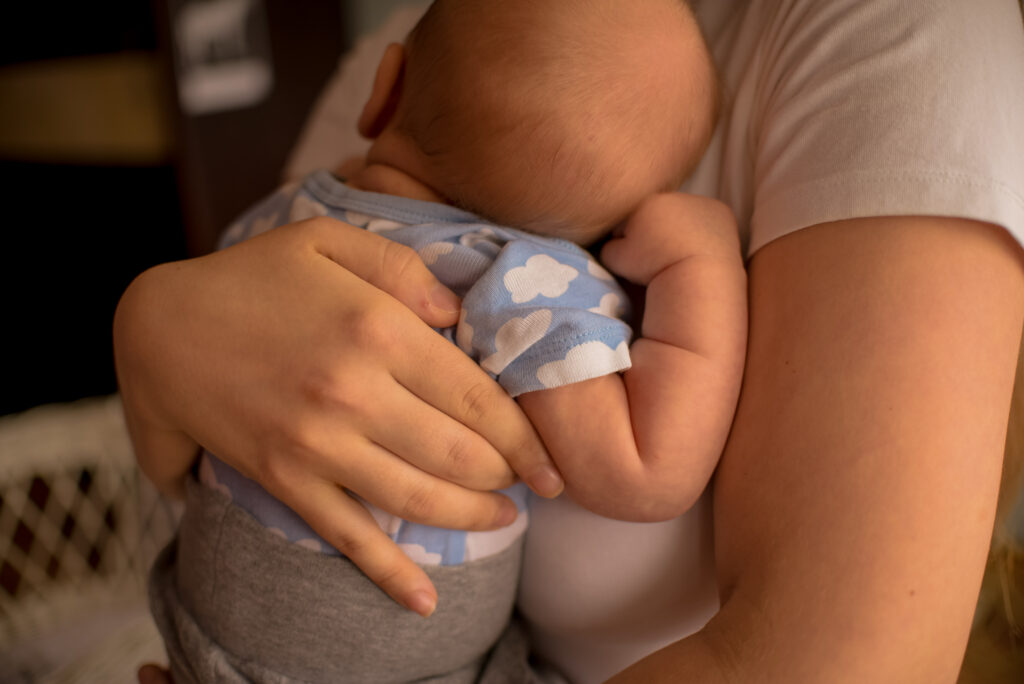
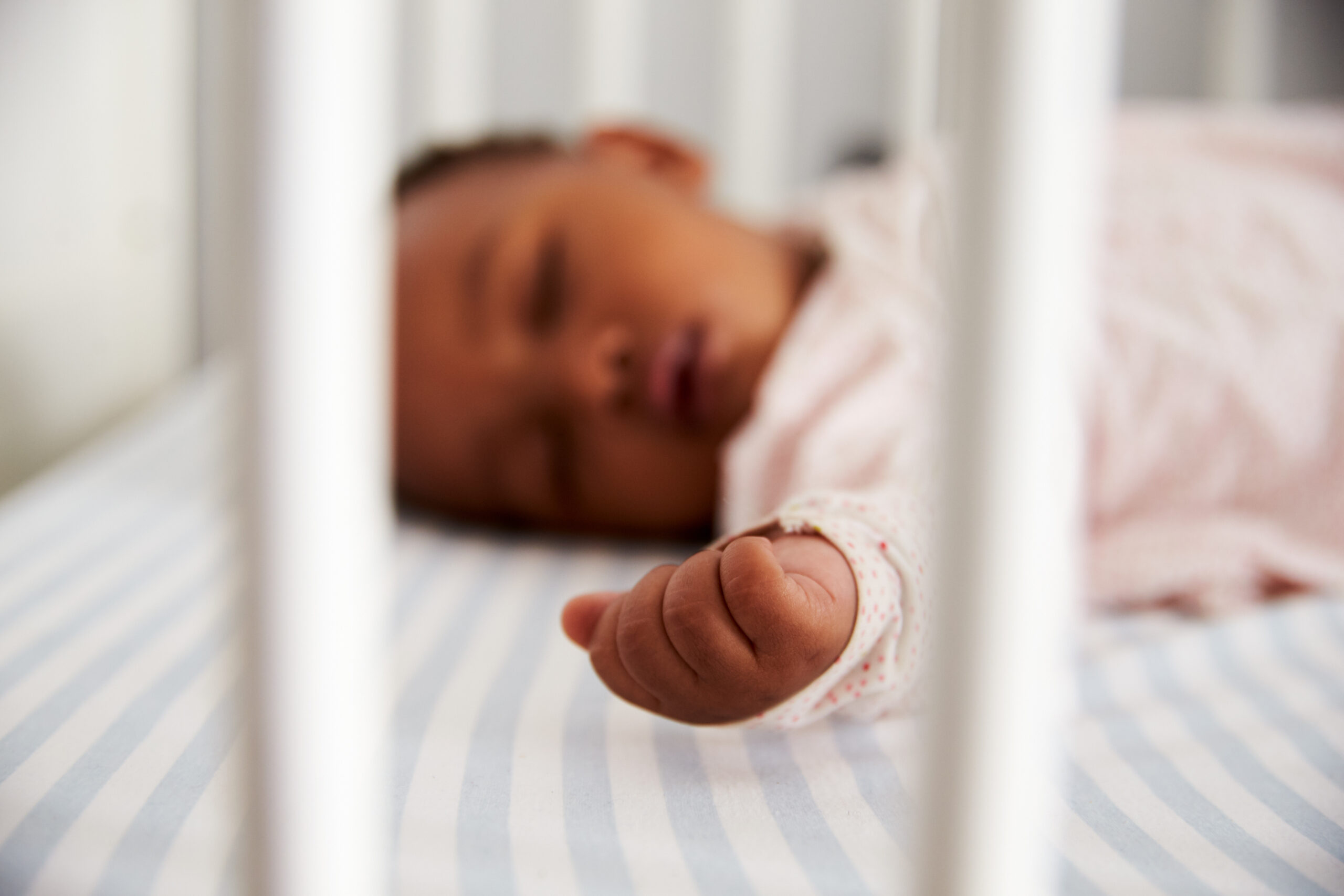
Newborn babies usually sleep between 14 and 17 hours in 24 hours, although there is considerable individual variation. Some babies sleep more, while others sleep less.
This sleep is split into many short periods rather than one long stretch. Sleep is usually divided fairly evenly between day and night in the early weeks.
Because your baby’s tummy is very small, they need to feed frequently, which naturally means they sleep for short periods at any one time.
Most young babies can only be awake for short periods, around 45–60 minutes, before they need to sleep again.

Baby sleep cycles
In the early months:
- Daytime sleep cycles are around 30 minutes
- Night-time sleep cycles are around 60 minutes
Babies’ shorter sleep cycles and lighter sleep patterns are thought to support frequent waking and responsiveness during a period when they are dependent on adults for feeding, comfort and regulation.
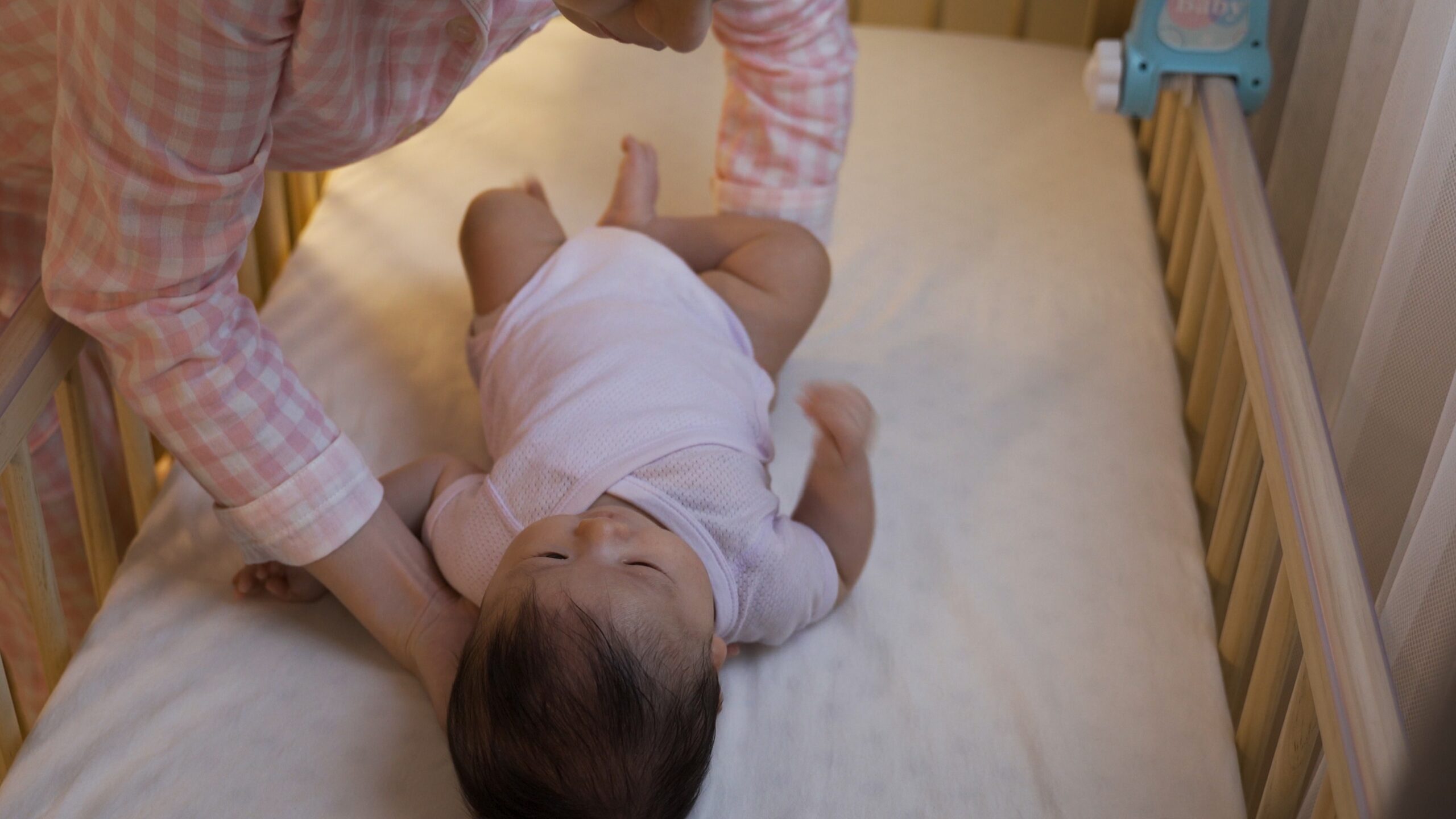
Because newborn babies are still developing their ability to regulate important functions such as breathing and temperature, following safer sleep guidance is essential. Placing babies on their back to sleep, using a clear, flat sleep surface and sharing a room (but not a bed) for the first six months are key recommendations to reduce the risk of SIDS.
What kind of sleep does your young baby have?
Young babies do not cycle through sleep in the same way adults do.
Instead, they experience two main types of sleep:
- Active sleep (REM sleep)
- Quiet sleep (non-REM sleep)
Newborns spend a large proportion of time in active (REM) sleep, which is thought to be important for brain development and the formation of neural pathways.

During active sleep, you may notice your baby:
- moving or twitching
- making small facial movements
- rapid eye movements under closed eyelids
- changes in breathing
At times, this can look like your baby is awake, but they are often still asleep and may naturally settle back into a deeper sleep stage.
How sleep changes from 2 to 4 months
By around 8–10 weeks, many babies begin to show clearer signs of day and night separation. While sleep still varies, parents often notice longer nighttime stretches emerging.
By 3 months, sleep patterns typically become more organised:
- More sleep is taken at night than during the day
- Night sleep begins to consolidate into longer blocks
- Daytime naps become more structured
At this stage, many babies begin producing their own melatonin, which supports more predictable sleep–wake rhythms.
By around 3–4 months, sleep cycles also begin to mature, with:
- night cycles extending to around 90 minutes
- daytime cycles extending to around 45 minutes
- longer periods of sleep before waking
This is a natural developmental shift, not a behavioural change.
A final note for parents
In the early months, unpredictable sleep is expected and developmentally normal.
If your baby is waking frequently, needing lots of comfort, or sleeping in short stretches, this is usually part of healthy development.
Sleep patterns will naturally evolve as your baby’s brain and body mature.